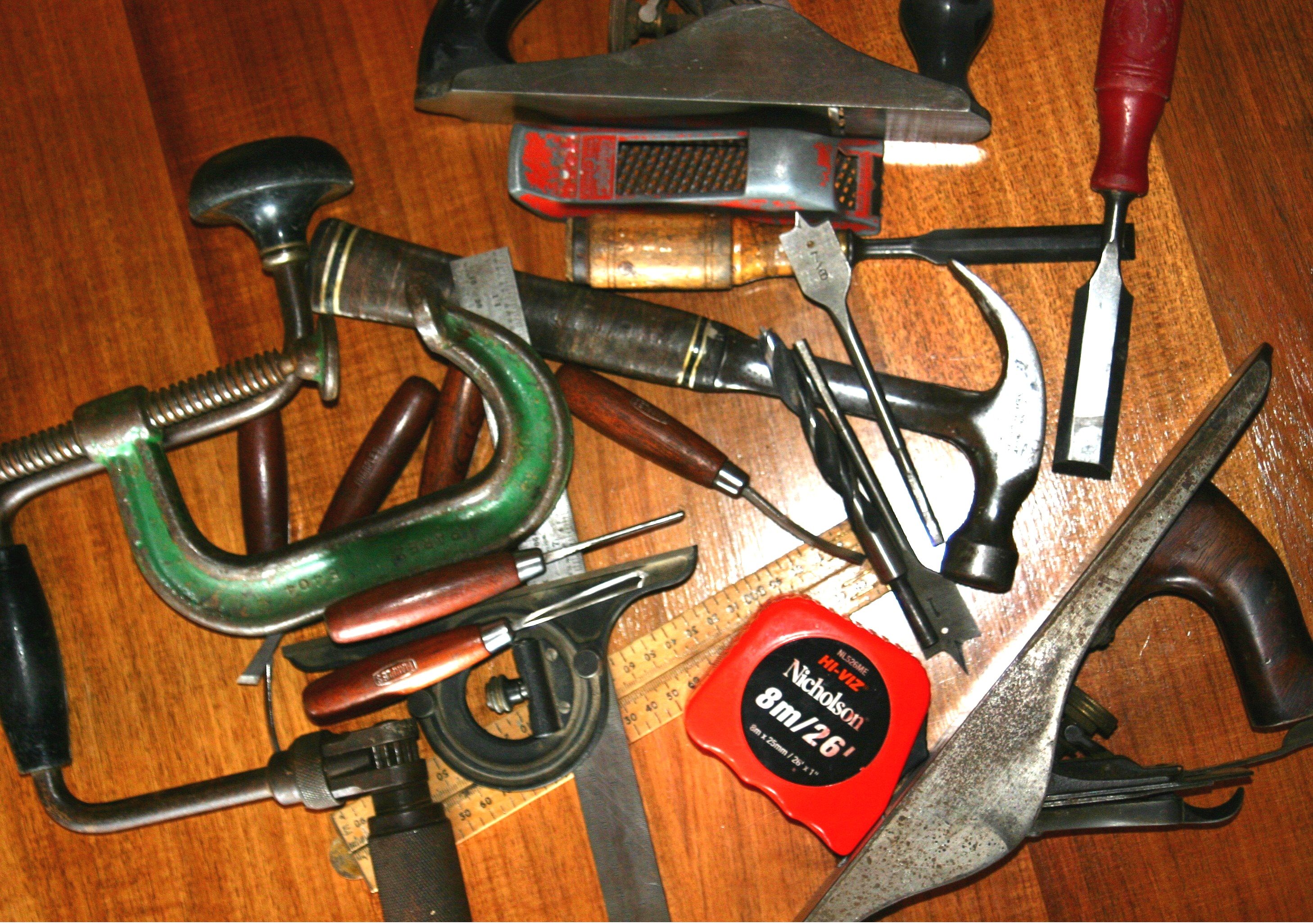
The choice of lumber species affects every step of a furniture build — how long dimensioning takes, how forgiving the joinery is during fit-up, and how the finished piece responds to seasonal humidity shifts in a Canadian home. Choosing the wrong species for a project's demands does not ruin the piece outright, but it does make the work harder and the result less predictable.
Hardwood vs. Softwood: A Functional Distinction
The botanical distinction between hardwoods (angiosperms) and softwoods (gymnosperms) does not map neatly onto actual hardness. Balsa is technically a hardwood. What matters practically is the Janka hardness rating, which measures the force required to embed a steel ball halfway into the wood's surface.
For furniture construction, the relevant implication is this: harder species hold crisp edges at joinery cuts better than softer ones, but they dull tool edges more quickly and require more muscle effort when using hand tools. Softer species are faster to work but more prone to denting during construction and in use.
Common Species Available at Canadian Lumber Yards
Eastern White Pine
Pine is the most accessible and lowest-cost option at most Canadian home improvement retailers. It works quickly with both hand and power tools, takes paint and stain well, and is easy to source in a range of widths and lengths across Ontario, Quebec, and BC. Its drawbacks are significant for furniture: it dents easily under normal use, and knots — common in No. 2 common pine — can interfere with joinery cuts or cause tool deflection mid-cut.
Select-grade pine, which has fewer and smaller knots, is substantially more useful for furniture and is worth the price difference. For painted pieces — a side table, a simple shelf, a storage bench — pine at select grade is a practical first lumber choice.
Poplar
Poplar is underused by beginners in Canada. It is a domestic hardwood with a Janka rating roughly three times that of white pine, but it machines and hand-planes with similar ease. It holds sharp edges at joinery cuts without the tendency to split that pine exhibits. Its green-grey streaked grain appearance makes it less suitable for clear-finish furniture, but for painted work it is arguably the best choice at the beginner level — dimensionally stable, inexpensive relative to other hardwoods, and forgiving of technique variations.
Hard Maple
Hard maple (sugar maple) is a native Canadian species harvested extensively in Ontario and Quebec. It is substantially harder than poplar and pine — Janka rating around 1,450 lbf — and produces furniture that resists surface wear and holds joinery tolerances well over time. The tradeoff is that it demands sharper tools to avoid tear-out on its tight, dense grain, and it can be difficult to hand-plane across the grain without a very fine blade angle.
Hard maple is a good second wood after a beginner has developed reliable sharpening habits with simpler species. Its pale, nearly uniform appearance accepts clear finishes well — oil, wax, and waterborne finishes all suit it.

Red Oak
Red oak is widely available at Canadian hardwood dealers in Toronto, Vancouver, Calgary, and Montreal. It is one of the least expensive domestically available hardwoods and has a distinctive open-pore grain structure that benefits from a grain filler before staining. Red oak hand-planes cleanly with the grain but can tear badly against it. It is a practical choice for furniture that will be stained or given a penetrating oil finish.
White oak has similar workability but contains tyloses — cellular structures that block its pores — making it more appropriate for applications where moisture resistance matters. The grain of white oak also produces the distinctive ray fleck visible in quartersawn boards, which many woodworkers consider aesthetically desirable.
Black Cherry
Cherry is a mid-density domestic hardwood that machines cleanly, hand-planes exceptionally well, and darkens from pale pink-tan to a deep reddish-brown over the first few years of light exposure. It is a more expensive option and is best reserved for pieces where the clear-finish appearance matters — a small box, a bedside table, a drawer front. Its long-term aesthetic development is not replicated by staining other species to a cherry colour.
Moisture Content and Canadian Climate
Wood is hygroscopic — it absorbs and releases moisture from the surrounding air. As it does so, it expands and contracts across the grain. Along the grain (longitudinally), movement is negligible. Across the grain (tangentially and radially), it can be substantial — several millimetres per year in species like white oak or hard maple in an Ontario home that runs central heating in winter.
In Canada's climate, indoor relative humidity swings between roughly 25% in heated winter conditions and 60–70% in summer. That range drives measurable wood movement in wide panels and solid wood table tops — a consideration that affects how furniture is constructed, not just what wood is chosen.
Lumber sold at Canadian building supply retailers is kiln-dried to a moisture content of approximately 19% (S-Dry designation) or 15% (KD-15). Furniture lumber should ideally be at 6–8% moisture content, which matches the equilibrium moisture content of indoor heated spaces in most Canadian provinces. Allowing kiln-dried lumber to acclimate in the workshop for two to four weeks before working it reduces the likelihood of joint gaps opening after assembly.
Reading Lumber Grades
Softwood lumber sold at Canadian building retailers follows the National Lumber Grades Authority (NLGA) standard. The grades visible on dimensional lumber from Home Depot, Rona, or local mills are:
- Select Structural — highest structural integrity, few defects
- No. 1 — good appearance, occasional tight knots
- No. 2 — common construction grade, more knots and wane
- No. 3 — lower visual quality, utility framing applications
- Stud — optimized for vertical load-bearing in framing
For furniture, No. 1 is the practical minimum in softwoods. Hardwood lumber sold through specialty dealers follows the National Hardwood Lumber Association (NHLA) grading system, where Firsts and Seconds (FAS) and Select are the grades appropriate for furniture panels and component stock.
Where to Buy in Canada
General construction lumber (pine, spruce, fir) is available at Rona, Home Depot Canada, and Home Hardware across the country. Hardwood species — maple, oak, cherry, walnut — are generally found through dedicated hardwood dealers. Regional options include Woodchuckers in Toronto, Windsor Plywood in BC and Alberta, and specialty hardwood dealers near major urban centres.
The Canadian Wood Council publishes species-specific technical data including shrinkage coefficients, density, and strength properties relevant to furniture construction. The Wood Database is a practical reference for species comparisons, with workability notes drawn from published forestry literature.
Once lumber species are chosen, the next step is understanding how joints connect those pieces. The Joinery Techniques article covers the most common connections used in beginner furniture, with attention to which species each joint suits best.